August 4, 2026, Comment off
CCcam vs OScam in 2026: Which Protocol Should You Use?
In the CCcam vs OScam debate of 2026, the honest short answer is this: OScam is the more powerful softcam because it is open source, actively maintained, and it supports iCam, while CCcam is the simpler protocol with near-universal receiver support. Many experienced users combine the two by running OScam with cccam or newcamd readers, so the CCcam vs OScam choice is rarely all-or-nothing. A good provider gives you credentials that work with both, letting your receiver decide which one fits best.
Key takeaways
- OScam is actively developed, highly configurable, and the only option of the two that handles iCam encrypted channels such as Sky DE.
- CCcam is easier to set up: one C-line in a CCcam.cfg file and you are watching TV in minutes.
- OScam can act as a client for CCcam servers through its cccam reader type, so the two are complementary rather than mutually exclusive.
- Accounts at cccam.eu include credentials usable for both protocols, with ready-made CCcam file and oscam.server downloads in the customer portal.
- You can test both on your own receiver with a free 48-hour trial, no card required.
What is CCcam?
CCcam is a card-sharing protocol that became the de facto standard on Enigma2 satellite receivers. A client connects to a server using a single line of text called a C-line, in the format C: host port username password. That one line is usually all the configuration you need.
The C-line lives in a file called CCcam.cfg, which almost every softcam and receiver image understands. If you have ever pasted a line into a box from Vu+, Dreambox, Zgemma or Octagon, you have used the CCcam protocol. Our guide on how to make a CCcam.cfg file walks through it step by step.
The original CCcam software itself is no longer developed. The protocol lives on because it is simple, widely supported, and implemented as a client inside modern softcams, including OScam.
What is OScam?
OScam (Open Source Conditional Access Module) is a full open-source softcam rather than just a protocol. It runs on the receiver itself, talks to your tuner through DVBAPI, and connects to remote servers through configurable readers. Supported reader types include cccam and newcamd, among others.
Configuration is split across several plain-text files: oscam.conf for global settings, oscam.server for readers, oscam.user for local accounts, and oscam.dvbapi for channel-to-reader mapping. That is more moving parts than a single C-line, but it is also where OScam gets its power. See our default oscam.conf reference and the latest oscam.dvbapi update for working examples.
Because OScam is open source and actively maintained, it keeps up with changes in encryption. The best-known example is iCam: patched OScam builds can handle iCam-protected channels such as Sky Germany, something the plain CCcam protocol cannot do on its own.
CCcam vs OScam: head-to-head comparison
Here is how CCcam vs OScam compares on the criteria that actually matter in 2026.
| Criterion | CCcam | OScam |
|---|---|---|
| Ease of setup | Very easy: paste one C-line into CCcam.cfg | Moderate: several config files to edit |
| Receiver support | Near universal on Enigma2 and most images | Very wide, needs an OScam-capable image or build |
| Active development | Original software abandoned, protocol frozen | Actively maintained open-source project |
| Flexibility and readers | Client-server only, single protocol | Multiple reader types (cccam, newcamd, more), local cards, filtering |
| iCam support | No | Yes, via patched builds |
| Resource usage | Very light | Light, slightly higher due to extra features |
| Config files | CCcam.cfg | oscam.conf, oscam.server, oscam.user, oscam.dvbapi |
When should you choose CCcam?
Choose CCcam when simplicity matters more than features. If your receiver image ships with a CCcam-compatible softcam and you just want mainstream channels working in five minutes, a C-line is the shortest path. There is no dvbapi mapping to think about and almost nothing to misconfigure.
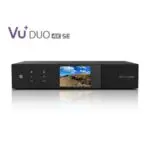
It is also the safe choice on older or locked-down boxes where installing a current OScam build is awkward. Practically every Enigma2 image released in the last decade can read a CCcam.cfg. If you are on Vu+, Dreambox, Zgemma or Octagon, our CCcam setup guide for Enigma2 covers the whole process.
The trade-off is that you are limited to what the protocol offers. No iCam, no per-channel reader control, and fewer diagnostic tools when something stops working. If a line does go quiet, start with our CCcam not connecting fixes.
When should you choose OScam?
Choose OScam when you want control, longevity, or iCam. Its web interface shows you exactly which reader answered each request, how fast, and with what result. That visibility alone makes troubleshooting far easier than staring at a frozen picture.
OScam is also the only sensible route to iCam-encrypted channels. Sky DE viewers in particular need a patched OScam build; we keep a dedicated iCam Sky DE guide updated with current frequency settings for exactly this case.
Finally, OScam scales with you. You can mix a cccam reader for one package with a newcamd reader for another, prioritize readers per channel through oscam.dvbapi, and even share a local card. Our oscam.server setup guide shows how to get a clean reader configuration running.
CCcam vs OScam: can you use both?
Yes, and in practice most advanced setups do. Because OScam includes a cccam reader type, an OScam installation can connect to a CCcam server using the very same credentials a C-line would use. The protocols coexist happily; only the client side changes.
This is exactly how accounts at cccam.eu work. Every subscription includes credentials usable with both protocols, and the customer portal offers ready-made downloads for each: a CCcam file for C-line setups and an oscam.server file for OScam readers. You pick the format your receiver prefers, or switch later without changing your account.
Each account also comes with two servers, Server 1 and Server 2, for redundancy. You add both to one receiver, so if one server reboots, the other keeps your picture on screen. Fair use is simple: one receiver per subscription, one channel at a time.
Try both protocols free for 48 hours
The fastest way to settle CCcam vs OScam for your own receiver is to test both on real servers. Grab a free 48-hour trial – no card required – and you get working credentials for both protocols within minutes, delivered automatically.
If you decide to stay, plans run 12 months, 24 months, or lifetime, all with instant automated delivery and the same dual-server redundancy. For help picking a provider more generally, see our roundup of the best CCcam server options in 2026.
Whichever protocol you choose, test it before paying anything: the free OScam test line guide shows how to run a full 48-hour test on an OScam receiver.
Frequently asked questions
Is OScam better than CCcam?
For features, yes: OScam is open source, actively maintained, more configurable, and supports iCam, which CCcam does not. CCcam is still better for pure simplicity, since one C-line is all it needs. Many users get both advantages by running OScam with a cccam reader.
Does CCcam still work in 2026?
Yes. Although the original CCcam software is no longer developed, the protocol remains fully functional and is supported by virtually every Enigma2 receiver and by OScam itself. Providers such as cccam.eu still deliver working C-lines in 2026.
Can I convert a C-line to an oscam.server reader?
Yes. A C-line in the format C: host port user pass maps directly to an OScam reader with protocol = cccam, using the same host, port, user and password values. At cccam.eu you can skip the manual conversion and download a ready-made oscam.server file from the customer portal.
What is iCam and which protocol supports it?
iCam is an additional encryption layer used on certain channels, most notably Sky Germany. Only OScam supports it, through specially patched builds; the plain CCcam protocol cannot decrypt iCam channels on its own.
Do I need separate subscriptions for CCcam and OScam?
Not with cccam.eu. Every account includes credentials that work with both protocols, plus downloadable CCcam file and oscam.server configs in the portal, so one subscription covers whichever softcam your receiver runs.
CCcam vs OScam: which is easier for beginners?
CCcam is easier for beginners because setup is a single C-line pasted into CCcam.cfg. OScam involves editing several files (oscam.conf, oscam.server, oscam.user, oscam.dvbapi), which takes longer but rewards you with more control and better diagnostics.